Thursday, August 25, 2011

Grandparents Day!

It's almost grandparent's day. This year grandparent's day falls on September 11th. Have you thought about a gift yet? How about some quality pictures of their grandbabies. Im sure they will be a hit. What grandparent doesn't love to show off their grandkids. My girls are very lucky to have such active granparents in their lives and even luckier to have a great grandma & great grandpa.

Here is a 5x7 greeting card I made. Let me make you one for that special grandparent in your life.

Sunday, August 21, 2011

Sneak Peak Session


Sneak peak photos of two gorgeous girls relaxing by the beach.


Tuesday, August 9, 2011

Winner

Congratulations to Danielle B. The winner of Yuma Mom! Please contact me by Thursday night to book your photo shoot. I look forward to working with you and your family.


Wednesday, August 3, 2011

Facebook

Chriseldas Images is now on facebook. WoooHooo!  If you have friends who are ready to shoot manuel, refer them here.  I will post lots of helpful tips & techniques on how to use your SLR camera to the fullest.  I will also explain the basics of photoshop.  Once I reach 300 fans I will be doing a giveaway.  Here are just some of the things that I will be giving away:
-your own custom watermark
-custom banner for your website 
-templates for photoshop such as a storyboard

Monday, August 1, 2011

The Exsposure Triangle, What's that?


Want to learn what aperture, shutter speed and iso mean? Well in order to get a "correct" exposure, they must all work together. Go grab your camera and maybe some popcorn while I explain.

Here we go.........
Aperture is the size of the opening in your lens when the picture is taken. (the f #) You measure the size of the opening in f stops.The bigger the opening, the more light that enters the camera. The smaller the opening the less light that enters the camera.
The larger the aperture (bigger hole), the smaller the f-stop number. Ex. f/2.8
The smaller the aperture (smaller hole), the larger the f-stop number. Ex. f/22
Are you confused yet? I know I was at the beginning.

Shutter speed is the amount of time the shutter is open, (1/# of a second). The shutter speed is the key in preventing your subject from being blurred in pictures.
iso is the measure of the camera's sensor sensitivity to light. The best thing to know about iso is that the lower the # the better, for example an 
iso of 100 = less digital noise (but just make sure to have lots of surrounding light around you)
iso of 1600 = more digital noise
*If you're indoors and don't have enough light, then you will have to have a higher iso, but remember the more noise you will have in your image.


To best explain how they all come together, I will use a metaphor to help you understand.

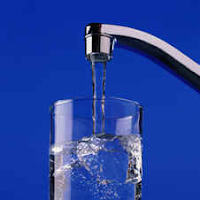
Imagine a water faucet, if light were water, a sensor would be like an 8oz glass. "Correct" exposure would be filling the glass. Not enough water means the glass can't be full (under exposed), too much water means the glass will overflow (over exposed).

Now to fill the glass properly and achieve the "correct" exposure you have the options of changing the opening in the faucet (aperture) and leaving the glass under the faucet for a necessary amount of time (shutter speed).

If your faucet is wide open, then you need less time to fill the glass, which means if you have a large aperture, therefore you need a faster shutter speed.

If your faucet is turned down, so water comes to a trickle, you will need more time to fill the glass. It means you have a small aperture, therefore, you need a slower shutter speed.

Now the iso would be the size of the glass. Rather than an 8 oz glass, we could use a 4 oz glass, which would require less water for it to be full. Remember, the higher you go, the more "noise" you will have in your picture.

By looking at this metaphor, it's clear that if you change one part of the exposure triangle, you have to change one or two of the other parts in the exposure triangle in order to have the same "correct" exposure.

 There are many examples to explain how the exposure triangle works. This is the best explanation I can use, because it is how it was explained to me, where I could easily understand it. I hope you have found this helpful. Remember each photographer has their own preference, so play around till you find yours.

Wednesday, July 27, 2011

Start your own photo blog.


Why is it important to have a photo blog? I can think of 5 very important reasons to start your own.
Reason 1:  It's fun to show your clients "teasers" of their own photo shoot before all their images are turned over to them. Teasers do exactly that and tease your clients, it provides them with instant gratification about their photo shoot and they just love it.
Reason 2:  It's very important to start documenting the pictures you take so that later on you can go back & see the improvement you have made in your photography skills. If you take a second to search through my archives, you will see my growth as a photographer, it's clearly noticeable.  I love to look back and see how far I’ve come, especially when I know there is alot I can still learn.

Reason 3:  Having a photo blog is like your own digital resumé.  It allows people to view your work and your skills as a photographer.  In turn, clients will keep coming back to you and/or refer people to you. 

Reason 4:  Have kids? I'm sure "grandparents" love seeing their grandkids on the world wide web.  Surely they will be your # 1 readers.
Reason 5:  Photo Blogs are a great way to build a network with all different kinds of photographers.  They can offer advice and critique your work.  There's always room for improvement.
Get started and create your own.  Here are a couple of websites where you can start.


Monday, July 25, 2011

Wonder How to get Beautiful Pictures?

Trying to get that perfect shot? Do you ever wonder how photographers make their images look sharp? Well, the magic does not happen by just the click of a button. It's not the camera that freezes a magical moment in time or the location that tells the story of a picture, it's the person behind the camera who dedicates each shot for perfection and uses their device properly... in manual mode!  Yes, step out of the box, get rid of auto shooting and into manual.  To get a beautiful exposure, you need to set your aperture (f stop), shutter speed and iso manually, according to your scene.  It's called  the "exposure triangle."  Make sure to select your focal point, then click! Oh, but if it was only that easy.  It takes lots of practice to shoot in manual & when I say lots, I mean LOTS.  So, don't get discouraged when your shooting in manual and see a completely black or white washed picture.  Keep practicing & remember, I was once just like you, trying to learn.
Check out the pictures below and judge for yourself.


Auto Setting:


Manual Setting: